Este artigo foi escrito originalmente em inglês.
 Ler em Português
Given the recent revelation by Nvidia’s CEO Jensen Huang to his employees about his marital infidelity, let me repeat the obvious. During 27 years of marriage to my wife, I had never been approached by a woman – let alone a spy — who explicitly attempted to have an affair with me. This is my perception of the situation. However, it is also possible that many women attempted to flirt with me but I did not recognize their signals because I was not tuned to the possibility that they are out there.
When Elon Musk tweeted here: “It troubles me greatly that we do not yet see any sign of aliens,” echoing Enrico Fermi’s question: “Where is everybody?”, I could not help myself but wonder whether we did not recognize signals from alien technologies because we were not tuned to the possibility that they are out there.
Given this perspective, we should use our most advanced telescopes to search for alien technologies. This is what the Galileo Project under my leadership is attempting to do. A couple of months ago, I invented a new observatory concept here which is optimized for high-resolution imaging and spectroscopy of Unidentified Anomalous Phenomena (UAP). This idea materialized into a construction plan within just a couple of months, as explained in today’s press release, attached below:
***
FOR IMMEDIATE RELEASE
Harvard Astrophysicist Dr. Avi Loeb Partners with Adam Weitsman to Launch First-of-Its-Kind Galileo Project Observatory
ITHACA, N.Y., November 5, 2026 — Harvard University astrophysicist Dr. Avi Loeb is bringing a new scientific approach to the study of unidentified anomalous phenomena (UAP) through a first-of-its-kind observatory being developed in Ithaca, New York, with funding from entrepreneur and philanthropist Adam Weitsman.
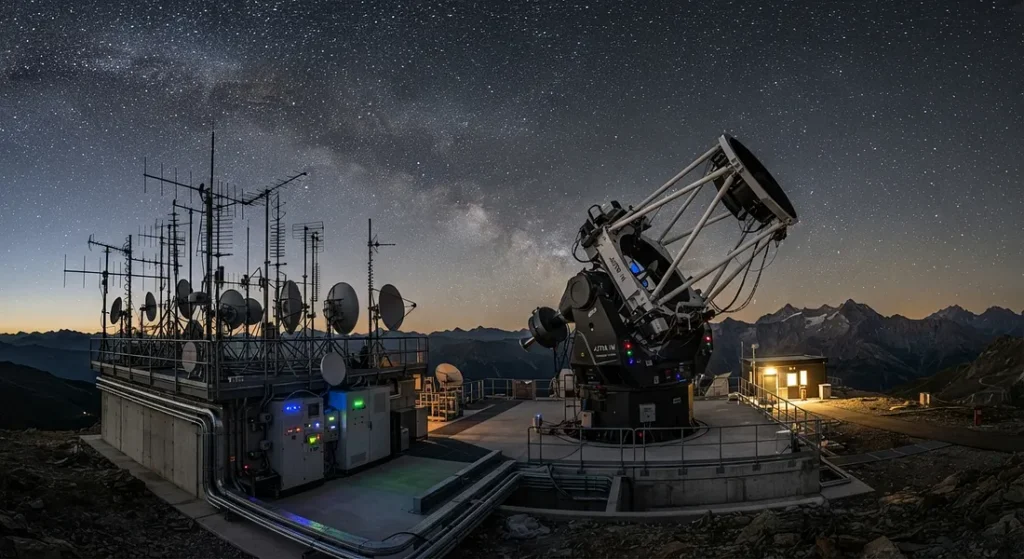
The new facility, part of Loeb’s Galileo Project, will combine advanced radar technology, artificial intelligence and a 0.7-meter PlaneWave CDK700 astronomical telescope to capture detailed images and analyze mysterious objects detected in Earth’s atmosphere.
Located on a historic property once owned by renowned astronomer Carl Sagan, the observatory will be the first within the Galileo Project to integrate continuous radar monitoring with a large, professional-class optical telescope capable of obtaining high-resolution imagery and analyzing the light emitted or reflected by objects of interest.
The project represents a significant advancement in efforts to investigate unusual aerial observations using independently collected scientific evidence, with a particular focus on unexplained orb-like objects reported in recent U.S. government disclosures.
A New Approach to Investigating Unidentified Aerial Phenomena
The concept emerged a couple of months ago here from Loeb’s examination of government reports describing unidentified anomalous objects, including luminous orbs whose nature has not been established.
While reports of UAP have attracted widespread public attention, many observations lack the detailed scientific measurements necessary to determine precisely what was observed.
“We need more data on these mysterious objects,” Loeb explained during a discussion of the scientific motivation behind the new observatory. The new facility is designed to address that challenge.
Unlike the Galileo Project’s three existing observatories in Massachusetts, Pennsylvania and Nevada, which primarily use smaller imaging systems to monitor the sky, the Ithaca observatory will introduce a coordinated system of tracking anomalous objects and directing a powerful telescope toward them for more detailed investigation.
A passive radar system will continuously monitor the sky using reflected radio signals to identify objects of interest. When an anomalous object is detected, an AI-assisted software will help distinguish known aircraft, satellites and other identifiable phenomena from objects warranting further study.
The system will then steer the large telescope toward the object, capturing high-resolution images of it as well as making spectroscopic measurements that would provide important clues about its physical characteristics and composition.
By combining these observational methods, researchers hope to obtain the kind of evidence needed to distinguish ordinary atmospheric events, human-made technology and genuinely unexplained phenomena.
“Over the past six months, the U.S. government has declassified data on numerous puzzling objects in our skies, whose nature is unknown. Rather than speculate on whether they represent natural atmospheric phenomena, birds, drones, balloons, aircraft or alien technologies of non-human origin, we should study them with state-of-the-art instruments. This observatory will demonstrate a new approach to collecting high-resolution images and spectroscopic data, potentially resolving this mystery with important implications for national security and fundamental science,” says Loeb.
The Ithaca facility will serve as the first implementation of this new observatory concept. If successful, the approach could be adapted for use at other locations, expanding the ability of researchers to investigate anomalous aerial phenomena.
Importantly, the Galileo Project’s scientific approach does not assume that unexplained objects are extraterrestrial in origin. Instead, its goal is to gather the observational evidence needed to identify what they are.
Continuing Carl Sagan’s Legacy of Scientific Exploration
The observatory’s location carries particular significance.
Weitsman acquired the historic property at 900 Stewart Avenue in Ithaca in 2024. The site previously served as the home and working space of Carl Sagan and his wife and scientific collaborator, Ann Druyan.
Sagan, a longtime Cornell University professor and creator of the groundbreaking television series Cosmos, helped popularize astronomy and the scientific search for extraterrestrial life, inspiring millions to consider humanity’s place in the universe.
Weitsman sought to honor that legacy by transforming the property into a place where scientific research and discovery could continue. His search for a scientific partner led him to Loeb, whose work investigates fundamental questions about the universe, including the possibility of extraterrestrial technology.
The partnership brings together Weitsman’s philanthropic commitment to scientific exploration and Loeb’s research into questions closely connected to Sagan’s intellectual legacy.
“Carl Sagan changed the way people around the world think about the universe and our place in it. When I acquired his former property, I wanted to do something that would honor that legacy in a meaningful way. Partnering with Dr. Loeb gives us an opportunity to support groundbreaking scientific research and potentially help answer questions that have fascinated humanity for generations. I can’t think of a better way to celebrate Sagan’s spirit of curiosity and discovery than to make new discoveries possible,” says Weitsman.
Bringing Scientific Discovery to a Global Audience
Beyond its research capabilities, the observatory is being developed with a strong emphasis on transparency, public engagement and scientific education.
Plans include an online platform through which people around the world can explore observational data, examine images collected by the telescope and follow the scientific process as researchers investigate objects detected in the sky.
The team is also exploring opportunities for the public to suggest astronomical targets for observation, allowing participants to help guide selected telescope observations and examine the resulting data.
Additional outreach initiatives will include educational videos, livestreamed discussions, public question-and-answer sessions with Loeb and ongoing updates on the observatory’s research and findings.
This approach is intended to make the scientific process more accessible while encouraging public participation in questions about the universe.
“Science advances when we collect evidence and remain open to what that evidence tells us. Carl Sagan helped inspire the public to ask profound questions about our place in the universe. Through this observatory, we want to give people an opportunity to participate in that same spirit of discovery, to examine real scientific data and to follow the process of investigating what we do not yet understand,” says Loeb.
Looking Ahead
Construction and development of the observatory are expected to begin in November 2026, with completion anticipated within approximately one year, depending on construction progress, equipment installation and scientific commissioning.
The facility will become the Galileo Project’s fourth observatory and its first to deploy this combined radar and large-telescope observing system.
As researchers work to understand unusual objects reported in Earth’s skies, the Ithaca observatory will provide an important new scientific tool for collecting evidence and investigating unexplained phenomena.
Located at the former home of one of history’s most influential advocates for scientific curiosity, the project connects Sagan’s legacy about the search for extraterrestrial intelligence with a new effort to explore questions about the universe through observation, evidence and discovery.
About Dr. Avi Loeb
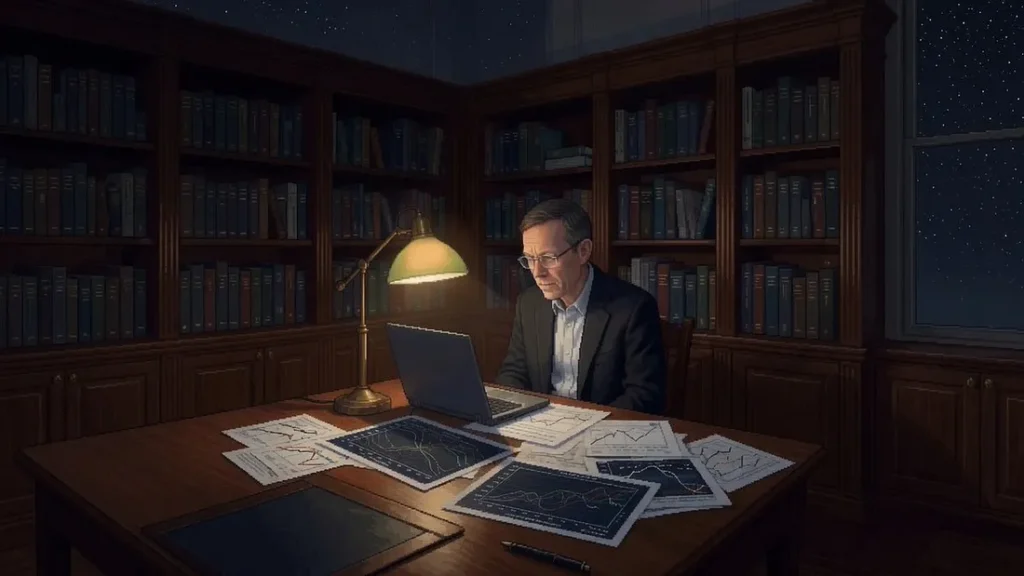
Dr. Abraham (Avi) Loeb is the Frank B. Baird, Jr. Professor of Science at Harvard University, director of the Galileo Project and a bestselling author. He previously served as chair of Harvard University’s Department of Astronomy from 2011 to 2020, director of the Institute for Theory and Computation at the Harvard-Smithsonian Center for Astrophysics, and founding director of Harvard’s Black Hole Initiative.
Loeb also chairs the UAP Science Advisory Council to the White House, Pentagon, FBI and intelligence agencies, and has authored more than 1,000 scientific papers and eight books, including Extraterrestrial: The First Sign of Intelligent Life Beyond Earth and Interstellar. His research spans black holes, the first stars, the search for extraterrestrial life and the future of the universe.
About Adam Weitsman
Adam Weitsman is a New York entrepreneur, philanthropist and owner of Upstate Shredding–Weitsman Recycling. His business ventures and philanthropic initiatives reflect his longstanding commitment to investing in communities and supporting meaningful projects throughout New York State.
Through his personal investment in the Galileo Project observatory in Ithaca, Weitsman is supporting innovative astronomical research while honoring the scientific legacy associated with Carl Sagan’s former property.
Media Inquiries and Interview Opportunities
For additional information or to request an interview with Adam Weitsman or Dr. Avi Loeb, please contact:
Katharina Hirschi
(607) 204–1049
Authorized publication by Dr.Avi Loeb