Este artigo foi escrito originalmente em inglês.
 Ler em Português
A new paper that I co-authored with my undergraduate student Shokhruz Kakharov (available here), addresses the question whether microbes can be transported from one star to another inside interstellar objects.
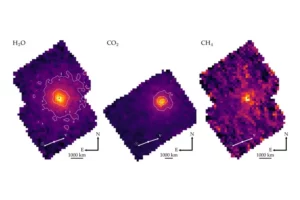
One way to accept interstellar life into the Solar system is through the gravitational capture of life-carrying icebergs by the Jupiter-Sun system in a three-body process described here. This process is exceedingly rare. Another natural process considers the possibility that microbes from a large interstellar object, like 3I/ATLAS, would be released in icy fragments as a result of the solar warming near perihelion, and these fragments might seed life in the early solar system by intercepting the path of a habitable planet like the Earth.
The prospects are far greater that Earth inherited its first lifeforms from Mars, which cooled earlier to a habitable surface temperature because of its smaller size. In the first few hundred million years of the solar system, Martian rocks might have delivered Martian microbes to the surface of Earth. In that case, we are all Martians, as these microbes seeded the emergence of complex lifeforms including humans. Elon Musk’s ambition to occupy Mars resembles the dream of adults to return to their childhood home. The first astronauts in the Solar system might have been microbes. They could have traveled from Mars to Earth inside a rock and survived the harsh conditions of space during a journey that lasted a few millions of years.
The separation between Earth and Mars ranges between 3 to 22 lights minutes. However, the journey of interstellar rocks stretches across distances of tens of thousands of light years. The feasibility of seeding planetary systems with microbes carried by interstellar objects depends critically on the survival time of these microbes, as shown in a paper that I co-authored with Idan Ginsburg and Manasvi Lingam in 2018 (published here).
The new paper here demonstrates that for the natural transfer of life by interstellar objects (Galactic panspermia) to be effective, the trip must be short or the natural survival time of microbes must be unreasonably long.
Interstellar objects transport solid material between planetary systems and may also carry biological material or molecular biosignatures. The new paper quantifies this transport process by connecting the Galactic populations of stars that produce interstellar objects to the survival of life during interstellar travel and the eventual delivery of life to planets.
The paper first investigates which stellar ages and Galactic components contribute to the interstellar-object population near the Sun, and quantifies which processes limit the transfer of biosignature-bearing material between planetary systems.
The calculation tracks star formation in the thin disk, thick disk, bulge, halo, and satellites of the Milky Way. Disk ages are drawn from the Milky Way star formation history and the age-dependent thickness of the Galactic disk is used to calculate the population of interstellar objects near the Sun. The paper models various ejection histories and the survival of viable cells, amino-acid biosignatures, and refractory organics as a function of the size of the host interstellar object. This calculation yields the expected number of microbe-carrying interstellar objects which are passing within the Earth-Sun separation per decade, based on the inferred abundance of the parent population of 3I/ATLAS-like objects.
These calculations imply that the local population of interstellar objects is slightly younger than the entire Galactic reservoir, which has an average age of 7.4 Gyr. It also suggests that frozen interstellar microbes are unlikely to be delivered into the inner solar system unless they are associated with trips that took less than 100 million years.
The remaining viable channel for Galactic panspermia involves technological interference. First, synthetic AI-assisted biology can be used to design lifeforms that survive or repair themselves for billions of years. Second, technological civilizations could plant habitable capsules in the bellies of interstellar icebergs and program them to maintain life with proper nutrients and thermal environments until it is time to release them. Such capsules act effectively as “technological wombs” with a pregnancy time of billions of years that give birth to life-carrying mini-gadgets when the illumination from a nearby star reaches habitable levels. These mini-gadgets would carry the seeds of life in bound orbits around the host star and seek landing opportunities on habitable planets. As they slow-down in the planet’s atmosphere and reach the planet’s surface, they would release their biological material with the goal of fertilizing the ground with life from another world. This can be regarded as one form of von Neumann’s vision of self-replicating machines, mixing biology with technology.
If any of the above-mentioned processes were realized within the Milky Way galaxy, then we are not alone.
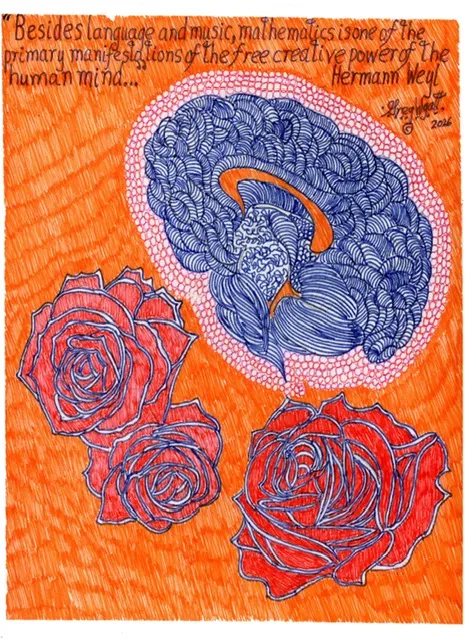
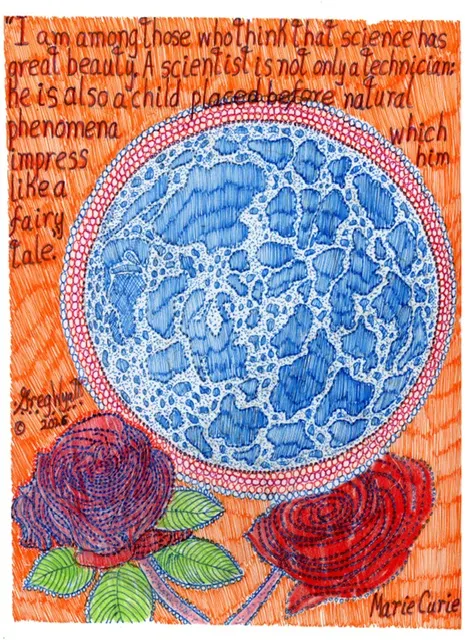
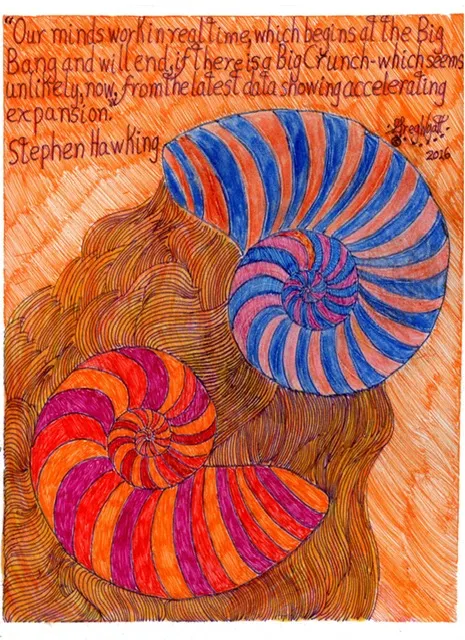
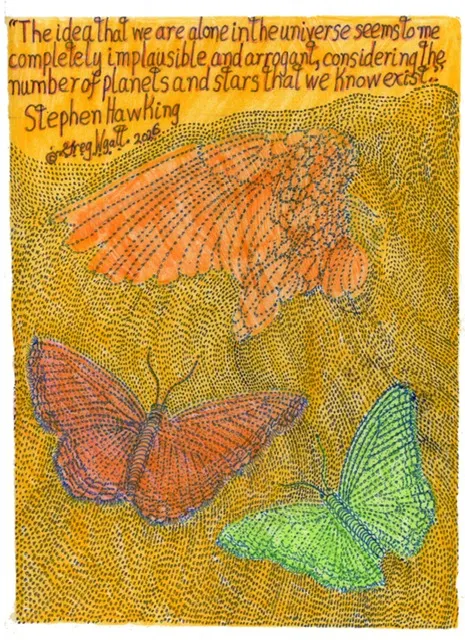
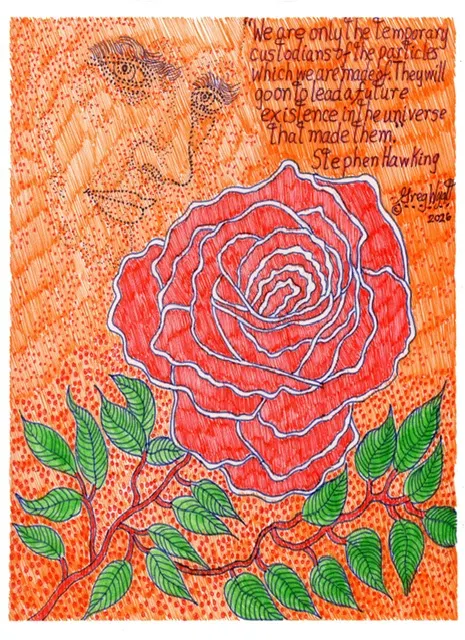
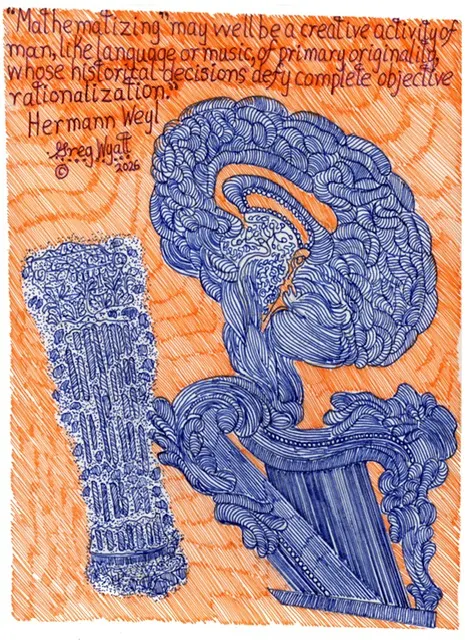
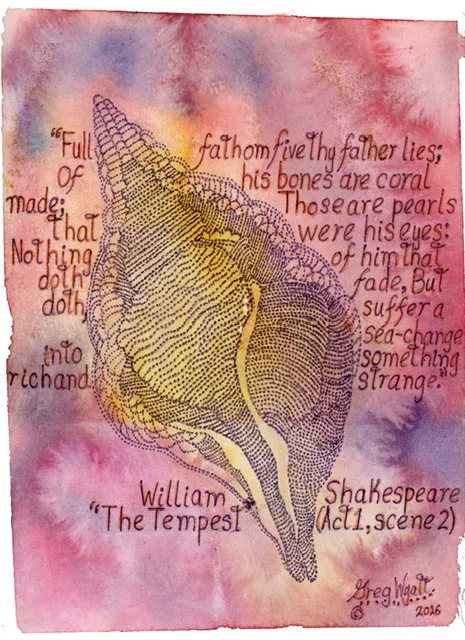
In this essay, I featured seven amazing watercolors from a series created by the celebrated artist, Greg Wyatt. They include insights from Marie Curie, Stephen Hawking, William Shakespeare, and Herman Weyl. This is the 28th in a sequence of essays, where Greg and I collaborate on the interface between art and science. The first essay in this series, titled “Music of the Cosmic Spheres,” appeared here; the second essay, titled: “Cosmic Waterfalls in Spacetime Cliffs,” appeared here; the third titled “Missing Elements in the Cosmic Jigsaw Puzzle,” appeared here; the fourth essay, titled: “Why Do We Exist?”, appeared here, and the fifth titled “Inspiration from the Stars”, appeared here, the sixth titled: “We Might Understand How the Cosmos Works Before We Understand How Life Works”, appeared here, the seventh titled: “Will the Human Survive for Billions of Years”, appeared here, the eighth titled: “The Butterfly Effect of Intelligence in the Cosmos”, appeared here, the ninth titled: “Benefits of Extraterrestrial Intelligence over AI”, appeared here, the tenth titled: “Übermenschen on Exoplanets” appeared here, the 11th titled: “If You Had an Infinite Research Budget, How Would You Allocate It?” appeared here, the 12th titled: “Are Human-Made Objects Orbiting Earth?” appeared here, the 13th titled: “Lets Send AI Astronauts, Not Humans, to the Moon”, appeared here, the 14th titled: “Our Highest Priority Should be National Innovation Centers to Complement AI Data Centers” appeared here, the 15th titled “The Cosmic Shells That Seeded Life” appeared here, the 16th titled “Chasing Alien Mysteries in the Sky” appeared here, the 18th titled: “The Smartest Investments in Our Future Are in Space” appeared here, the 19th titled: “The Best and Worst Are Yet to Come”, appeared here, the 20th titled “Would Alien Visitors Possess Intelligence Based on Silicon Chips or Synthetic Biology?” appeared here, the 21st titled “Cosmic Discoveries by National Security Sensors” appeared here, the 22nd titled “On Mysterious Orbs and Fireballs” appeared here, the 23rd titled “Neutrinos Are Worth a Thousand Words” appeared here, the 24th titled: “What is the Real Estate Value of the Neighboring Habitable Planet GJ 3378 b?” appeared here, the 25th titled “A New Galileo Observatory in Celebration of Carl Sagan”, appeared here, the 26th titled “The Universe Was Sculpted in Invisible Matter” appeared here, and the 27th titled “Distinguishing Reality from Our Imagination” appeared here.