Este artigo foi escrito originalmente em inglês.
 Ler em Português
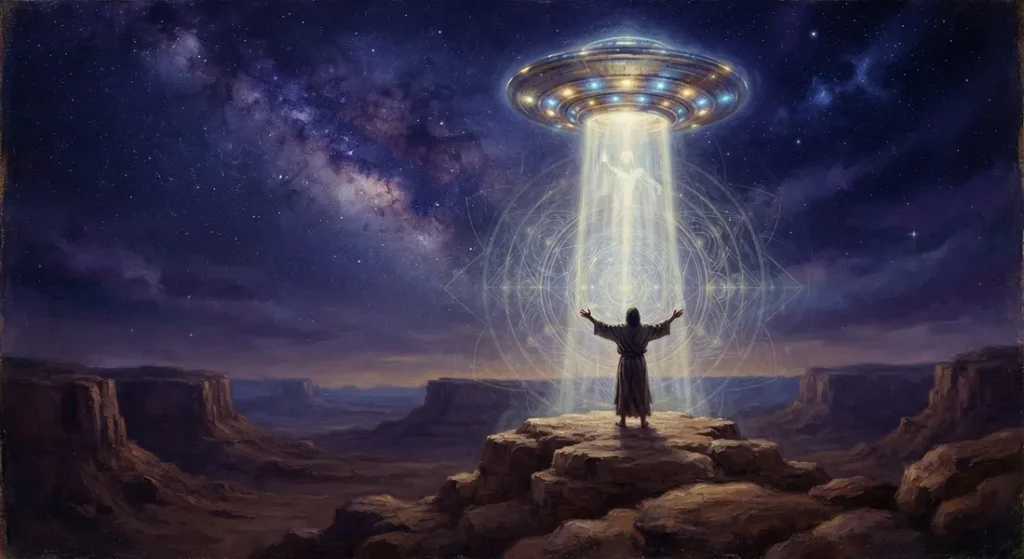
A system of statements based on conviction rather than evidence is closer to religion than it is to science. Of course, I know of many scientists who are also religious but they fully recognize the difference between scientific knowledge and religious belief.
The space of possible realities is far greater than the specific physical reality that we live in. As a result, human history is full of imagined stories. In the same vein, the practice of science is full of conjectures or unproven theoretical ideas. But what makes science different from politics or religion is the surrender to empirical evidence as an arbitrator.
The quest for evidence is commonly adopted by detectives who aim to resolve mysteries, including fictional characters like Sherlock Holmes who was quoted by Arthur Conan Doyle as saying: “When you have eliminated all which is impossible, then whatever remains, however improbable, must be the truth.” This assertion is certainly true about quantum mechanics as the counterintuitive nature of physical reality. The 2022 Nobel Prize in Physics was awarded to Alain Aspect, John F. Clauser, and Anton Zeilinger for their groundbreaking experiments with entangled photons. Their work confirmed the reality of quantum entanglement and proved that Albert Einstein’s objections to this phenomenon, which he famously derided as “spooky action at a distance,” were incorrect.
Other scientific mysteries over the past century remain unresolved. Chief among them is the challenge of unifying quantum mechanics and gravity. The latest conjectures about doing so in the presence of extra dimensions or supersymmetry lack empirical support. This does not make these scientific ideas resemble religious myths because the physicists who explore them recognize that they can only gain traction by experimental support.
What makes the situation confusing for the general public is that most often, the scientific data necessary for drawing definitive conclusions is absent or not good enough. In politics or religion, conviction is sufficient for attracting many likes on social media because confidence is regarded as an admirable trait in our otherwise fragile life. However, in science, the most accomplished mathematicians engaged in String Theory or even the most advanced version of superintelligence, will not be able to figure out the truth about the physical reality without high-quality data from instruments that probe it.
The approach of physics is an extension of the way our body works. We rely on data from our biological sensors, known as receptors, to monitor the internal state of the body and interpret the external world. These native sensors detect physical, chemical, or mechanical changes and translate them into electrical signals that our brain can process. But the data is often insufficient for drawing definitive conclusions.
When we see a cat walking towards a building and appearing on the other side, our mind comes up with the plausible conjecture that a single cat existed throughout the entire period even though our view of the cat was blocked by the building during some of the time. Alternatively, we can imagine that there are numerous identical cats hiding behind the building with only one coming out after some time. The only way to figure whether this hypothesis is true or false is to gain a direct view of the other side of the building. This does not require that we access the other side, which might be unfeasible if obstacles block our way. Instead, we can use a drone camera or a fortuitously-positioned window that reflects the image of the hidden region.
Social-media influencers might prefer not to collect any data, because the lack of conflicting evidence gives them the license to spread the “many cats interpretation” and attract followers. The temptation to spread myths is attractive because it offers a shortcut to societal notoriety. On the other hand, the use of scientific instruments to vet the “many cats interpretation” offers us a better path forward than the number of likes a story gets.
Consider Unidentified Anomalous Phenomena (UAP), formerly known as UFOs. The fact that UFO reports persisted for 80 years does not lend credence to their alien technology interpretation. The Vatican insisted on the popular story that the Earth is at the center of the Universe for many centuries, but eventually admitted on October 31, 1992 that this story was false. Unlike blockbuster script writers in Hollywood, nature is under no obligation to follow our wishes.
Most of the time, scientists must remain agnostic because the data is not good enough to deliver a verdict about the validity of a hypothesis or an interpretation. Patience is key. The rush to a premature conclusion can have disastrous public relations consequences, as in the case of the old cosmological model of the Catholic Church.
Jay Stratton’s new book about UAP, Out of the Shadows, employs a “self-sealing” logical framework that preemptively labels skepticism as part of a government conspiracy. This rhetorical strategy creates an unfalsifiable loop where any demand for hard evidence is automatically twisted into proof of a cover-up. This type of closed epistemic system operates through several distinct layers. Testimony alone is treated as absolute truth, while the standard scientific requirement for verifiable data is reclassified as a hostile act of disinformation. Skeptics are told that if they feel genuinely unconvinced, they are simply victims of brainwashing, stripping away their critical thinking agency. By framing the debate as an ongoing war against “gatekeepers,” this narrative guarantees an endless demand for future books, documentaries, and media appearances to counter the alleged cover-up. This framing does not mean that Stratton is wrong about everything he says. He has admirable credentials as the leader of the UAP Task Force within the U.S. government. Testimony from a credible insider is a legitimate reason to investigate. But it’s a reason to start, not a reason to stop, and a book that treats its own testimony as the terminus of inquiry is overreaching. The honest reading of “we now know with certainty” is “I am certain,” which is a statement about Stratton’s mind, not about what’s in a hangar of a supposedly alien spacecraft.
On September 10, 2026, I humbly invited Jay Stratton to meet with the UAP Science Advisory Council or disclose evidence that will guide us to support his public statements. My invitation was repeated by Council member, Dr. Tim Gallaudet, but I received no response from Stratton. Instead, I was attacked personally by believers who argued: “How dare you question what Jay Stratton said? He knows what he is talking about.” I respect their conviction but this is not how science works. We must have access to evidence or else such claims do not hold water.
Paraphrasing Sherlock Holmes: “When you have eliminated all which is impossible to explain UAP, such as birds, meteors, balloons, drones, missiles, aircraft or satellites, then whatever remains, however improbable, must be the truth.” For now, the UAP Science Advisory Council provided evidence in a paper posted here that more than 8% of the UAP videos declassified by the Presidential Unsealing and Reporting System for UAP Encounters involve birds. Regarding the identity of the remaining 92%, we have to remain agnostic and collect better data or check the hangars that whistleblowers guide us to.
Authorized publication by Dr.Avi Loeb