Este artigo foi escrito originalmente em inglês.
 Ler em Português
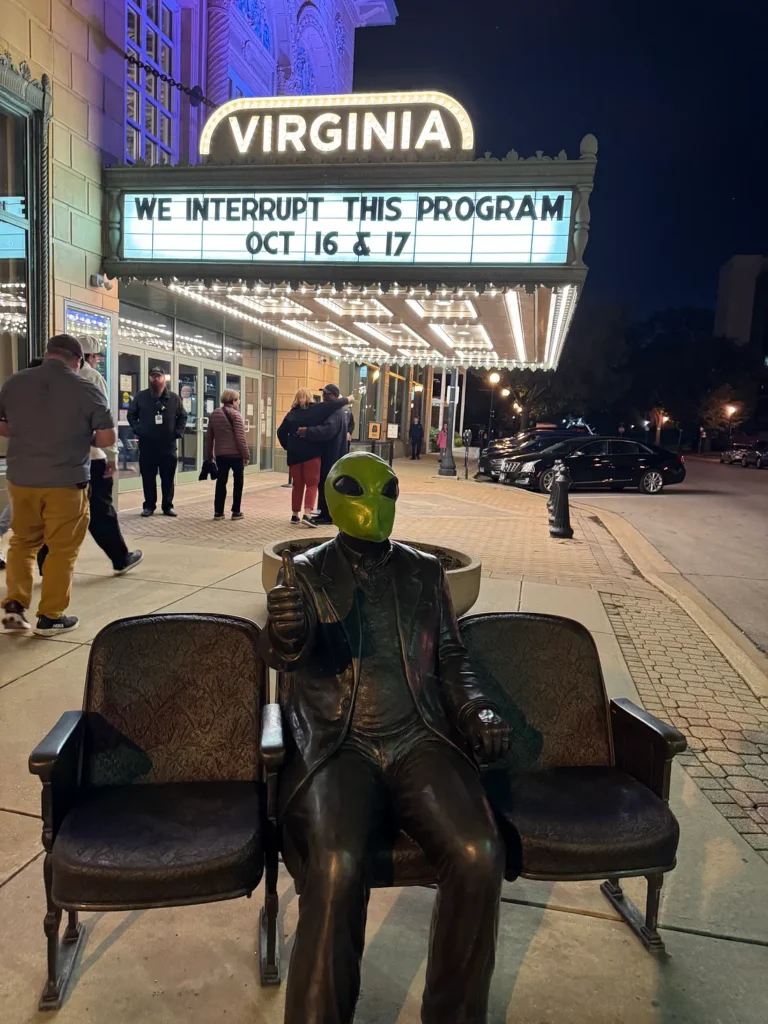
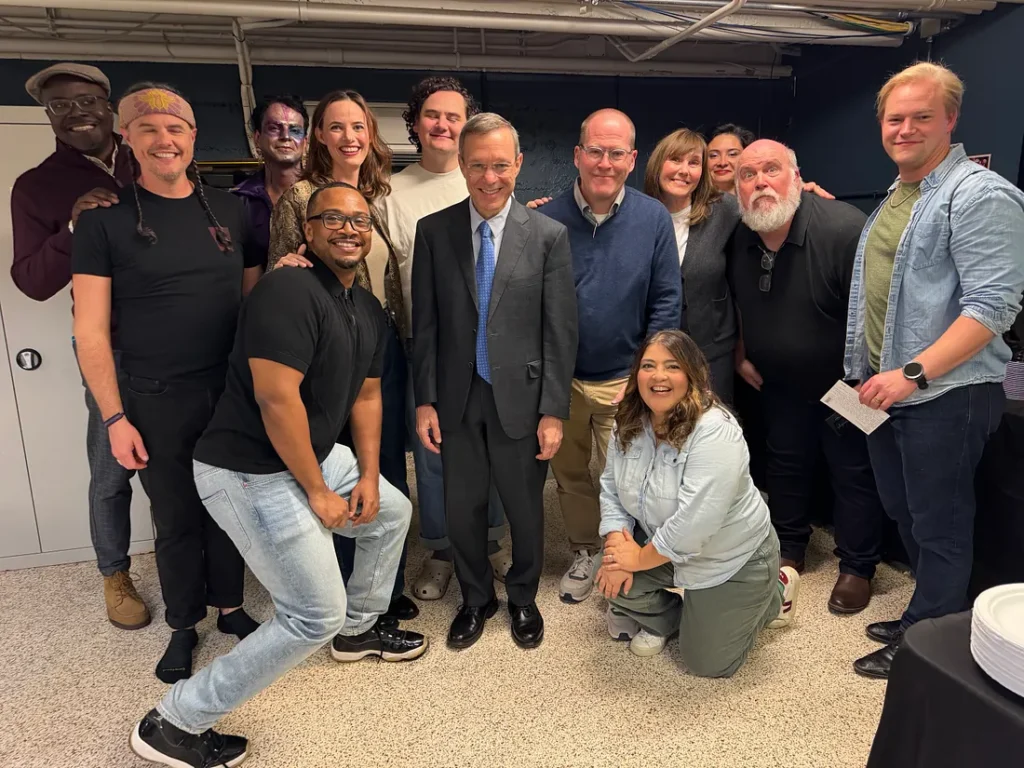
In the new play that I participated in last night at the historic Virginia Theatre in downtown Champaign, Illinois (“We Interrupt This Program,” written by Bill Odenkirk), the alien character (played by Bob Odenkirk) complains that his spacecraft is such an old model that there is an ashtray in the door. Also, the food is so bad that even a black hole (which eats everything, including light) spits it out.
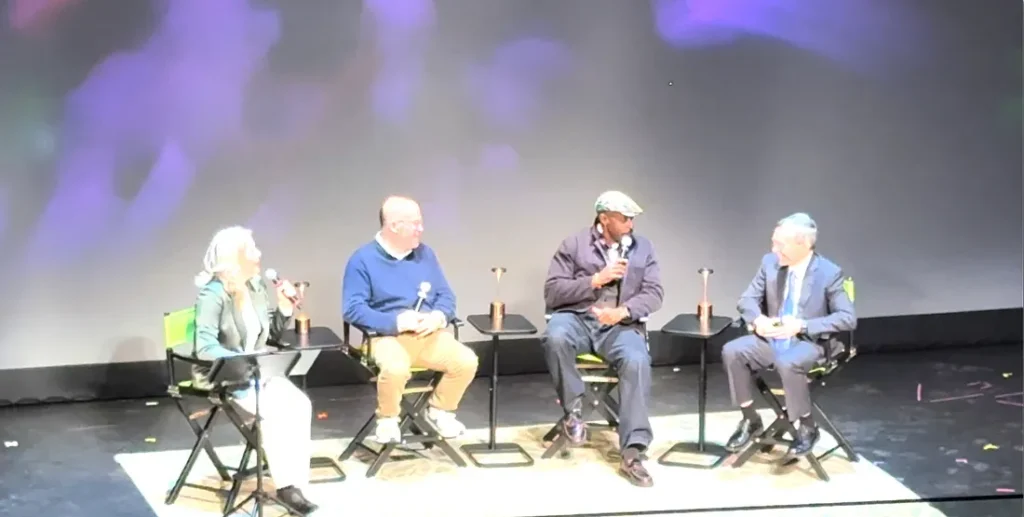
The show was brilliant but was mostly about humans. The aliens were the focus of a subsequent panel discussion, moderated by Emmy-winning PBS host, Sarah Edwards, and attended by Ahmed Best (Star Wars prequel trilogy), the four-time Emmy winner Bill Odenkirk (The Simpsons, Futurama, Mr. Show) and myself. The event was sold out to an audience of nearly 1,500 people.
For eight snippets from the 45-minute panel discussion, click on the following links: (i) Introduction, (ii) Science Fiction, (iii) Cosmological Context, (iv) UAP History, (v) UAP Storytelling and Much Needed Scientific Evidence, (vi) Jay Stratton’s latest testimonies, (vii) The Galileo Project, and (viii) Alien visitation is not necessarily about us.
Press enter or click to view image in full size
Earlier in the day, I gave a special seminar at the University of Illinois, where I reviewed the latest updates on the “Presidential Unsealing and Reporting System for UAP Encounters” from the vantage point of my leadership of the UAP Science Advisory Council (https://uapsac.com/) in service of the Office of the Director of National Intelligence, the White House, the Pentagon, the FBI and the Intelligence Community. The video of this lecture is available here.
An hour later, I explained here on Fox 25 Chicago the added benefit from digital data or material evidence over storytelling regarding the nature of Unidentified Anomalous Phenomena (UAP).
The fundamental question underlying all of these discussions is: “Where is the nearest evidence for alien technology?” The popular view in academia is that extrasolar life is mostly confined to birth sites in the habitable zone of stars. In such a case, both biological technological signatures are many light years away from Earth, making their detection highly challenging.
However, adopting this default assumption without conducting an extensive search for alien tech in our backyard makes little sense. In the same fashion that billions of dollars were already invested over five decades in ruling out candidate particles for dark matter, we should invest similar resources and time in the challenging search for alien tech near Earth before converging on the premise that it can only be found far away. Enrico Fermi’s question: “Where is Everybody?” should be turned on its head into an action item: “Let us search right here and now.”
The search for local clues of anomalous alien tech which is markedly better than human-made tech, would be limited by the capabilities of our best sensors and intelligence. Since the U.S. government conducted for decades sensitive searches for adversarial objects as a matter of national security with a budget that is a hundred times bigger than the funding allocated to science, there is a chance that it inadvertently discovered alien tech.
If an alien spacecraft is in possession of the U.S. government or corporations like Lockheed Martin, as some whistleblowers contend, then this material evidence should be presented to President Trump and brought to the attention of the public. Such knowledge must be analyzed in detail scientifically to understand better the origin and intent of the alien visitation in our cosmic backyard. Subsequently, policy makers, economists, psychologists, philosophers and theologians should examine the implications of this new scientific knowledge for the future of humanity.
The material evidence itself will likely become the most attractive tourist destination. Even without reverse engineering alien technology, its owner can make a huge revenue out of turning it to a highly-priced exhibit in a museum or an amusement park.
But the first step in this important journey must be triggered by digital or material evidence beyond a reasonable doubt. Once presented, it will enter the annals of human history by transforming the next State of the Union address by President Trump to a statement about the State of the Universe.
If a nearby alien craft is ready for boarding, I will stand first in line to board it and take a one-way ride away from the terrestrial troubles in my daily news feed. Rather than seek likes on terrestrial social media, I prefer to discuss the wonders of the Universe with other curious travelers in interstellar space.
For that reason, my request to anyone who has relevant information is simple: “Please take me to the nearest alien spacecraft.”