Este artigo foi escrito originalmente em inglês.
 Ler em Português
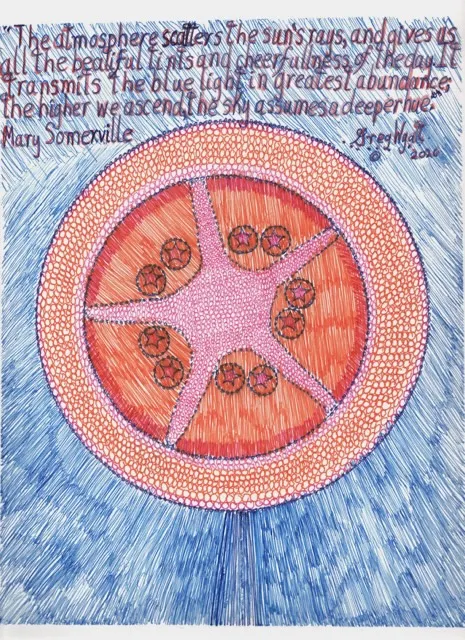
A supernova remnant looks like a pomegranate, carrying the seeds of life in the form of Carbon, Hydrogen, Nitrogen, Oxygen, Nitrogen, Phosphorus and Sulfur (abbreviated as CHNOPS) inside. These elements make up roughly 98% of the mass of most living organisms and serve as the fundamental building blocks for all primary biomolecules: carbohydrates, lipids, proteins, and nucleic acids (DNA).
Carbon [C] is the backbone of life. Its unique ability to form four stable covalent bonds allows it to build complex, chain-like, and ring-shaped molecules. Hydrogen (H) is the most abundant element in the universe. It pairs with oxygen to form water (H2O) and creates hydrogen bonds, which give DNA its double-helix structure and stabilize protein shapes. Nitrogen (N) is a critical component of amino acids (the building blocks of proteins) and nitrogenous bases (the core elements of DNA and RNA). Oxygen (O) is an essential building block in water and organic molecules. It is a crucial constituent in cellular respiration, the process by which many organisms generate energy. Phosphorus (P) is a key component of the sugar-phosphate backbone in DNA and RNA. It is also central to ATP (Adenosine Triphosphate), the universal energy currency of cells. Sulfur (S) is found in specific amino acids like cysteine and methionine. Sulfur forms disulfide bonds that fold and lock proteins into their precise, functional three-dimensional shapes.
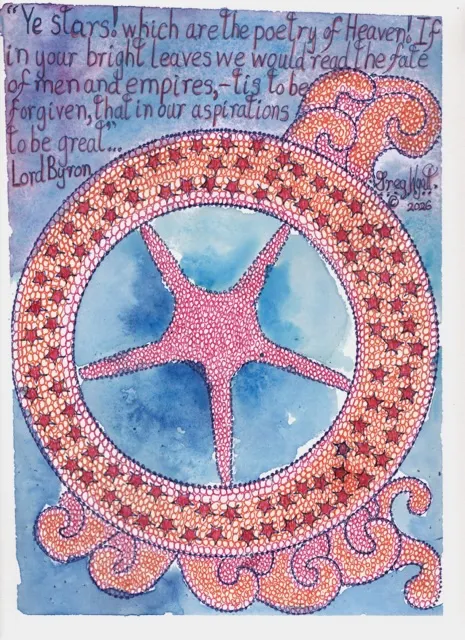
After a star with over 8 times the mass of the Sun consumes its nuclear fuel, it explodes in a supernova and sheds its envelope, which is rich in CHNOPS elements. The resulting dispersal of the heavy elements enriches the interstellar medium with the necessary building blocks of life, which otherwise would have been locked away in the bellies of stars. A supernova remnant is a shell full of clumps, appearing like a red-skinned sphere packed with glowing seeds, like a pomegranate.
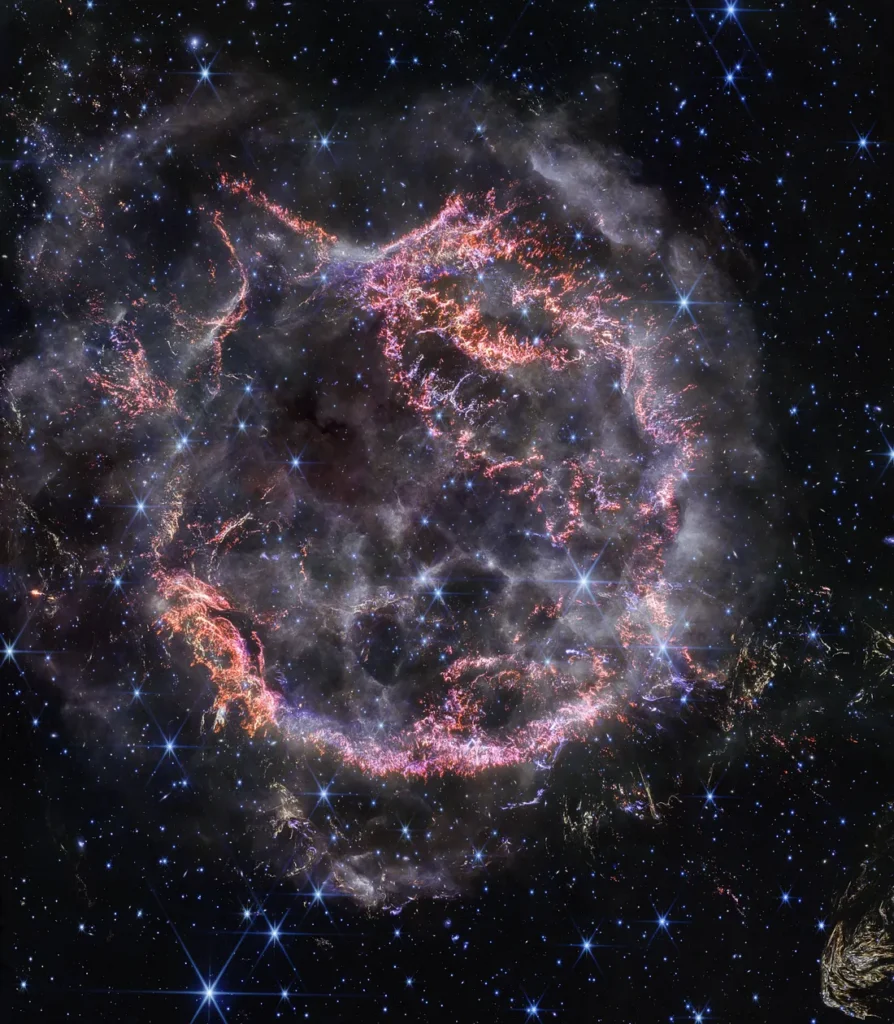
The skin is a thin, bright outer shell. When a star explodes, the ejecta slam into the surrounding gas and drive a shock wave outward. Most of the light comes from a thin layer just behind that shock, so a roughly spherical remnant projects onto the sky as a bright rim with a dimmer interior, the way a hollow sphere looks like a ring. That rim is the pomegranate’s rind.
The seeds are the clumpy ejecta. The inside of the exploding star does not come out as a smooth mist. Instabilities during the explosion trigger Rayleigh–Taylor fingers (the same process that makes a dense fluid sitting on a lighter one break into blobs) which fragments the ejecta into dense knots. Those knots are rich in freshly made oxygen, sulfur, silicon, and iron. When they get hit by the reverse shock or run into surrounding gas, they light up individually as bright, compact blobs. For example, the supernova remnant Cassiopeia A at a distance of 11,000 light years, shows thousands of these glowing beads scattered through the shell. Those are the arils.
Narrowband images of remnants are often dominated by hydrogen-alpha and ionized sulfur, both of which emit red light, so the standard false-color choices give the supernova remnant a ruby tint. Clumps embedded in a red translucent shell resemble a cross-section of a pomegranate.
From interstellar debris, the CHNOPS elements find their way to habitable planets like the Earth. Remarkably, both comets and asteroids are rich in the prebiotic organic molecules necessary for life to emerge. Pristine space rock samples returned by missions like NASA’s OSIRIS-REx Mission (from the asteroid Bennu) and JAXA’s Hayabusa2 (from the asteroid Ryugu), as well as data from comet-chasing missions like ESA’s Rosetta, have confirmed the presence of the essential CHNOPS elements. Phosphorus was notably detected directly in the dust of Comet 67P by the Rosetta Spacecraft. Both Bennu and Ryugu showed the presence of amino acids, which link together to form proteins and drive cell structure and metabolic functions. Samples from asteroid Bennu revealed over 30 different types of amino acids. This includes up to 15 of the 20 primary amino acids used by life on Earth (such as glycine, alanine, and valine). The simple amino acid glycine was successfully detected by NASA’s Stardust mission in dust from Comet Wild 2 and later confirmed floating in the gas cloud around Comet 67P. All five canonical nucleobases: Adenine (A), Guanine (G), Cytosine ©, Thymine (T), and Uracil (U) — the structural letters that store genetic code in DNA and RNA, were pristinely preserved inside asteroids Bennu and Ryugu. Fundamental sugars like ribose (the central framework of RNA) and glucose (a primary energy source) have been identified in asteroid materials. Comets and asteroids contain volatile compounds like ammonia, formaldehyde, aldehydes, and ketones.
These discoveries strongly reinforce the theory of exogenous delivery, the idea that a heavy cosmic bombardment of asteroids and comets billions of years ago seeded the early Earth with the water and raw organic inventory needed for life to spontaneously spark.
Observations of the interstellar object 3I/ATLAS revealed an unusually rich cocktail of organic molecules, most notably a high concentration of methanol (CH₃OH), methane (CH₄), hydrogen cyanide (HCN), and cyanogen (CN), alongside carbon monoxide and water ice (as reviewed here) down to layers that are meters deep (as discussed here).
All of these observations suggest that the building blocks of life are ubiquitous throughout the Milky-Way galaxy. Since similar circumstances lead to similar outcomes, we are probably not alone.
When searching for a sibling out there, we better aim high rather than low and entertain the possibility of an intelligent counterpart. As of now, astrobiologists plan to invest over ten billion dollars in the search for the chemical fingerprints of microbes in the atmospheres of exoplanets, thousands of light years away. While they are doing that, we should also invest similar amounts of money studying Unidentified Anomalous Phenomena (UAP) close to Earth, akin to searching for a tennis ball among the rocks in our backyard that would flag the existence of a neighbor. This is what the UAP Science Advisory Council (https://uapsac.com/) is doing, with no funding as of yet. The best things in life are priceless.
Humanity recently birthed a new species with Artificial Intelligence (AI). We share a common ancestry with AI. Its essential ingredient, Silicon, is also ejected by supernova.
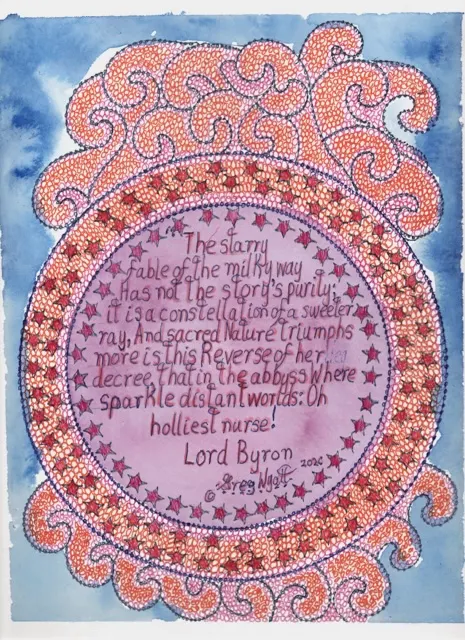
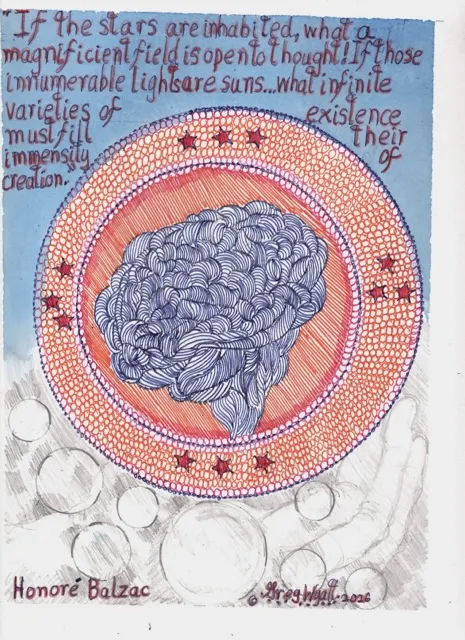
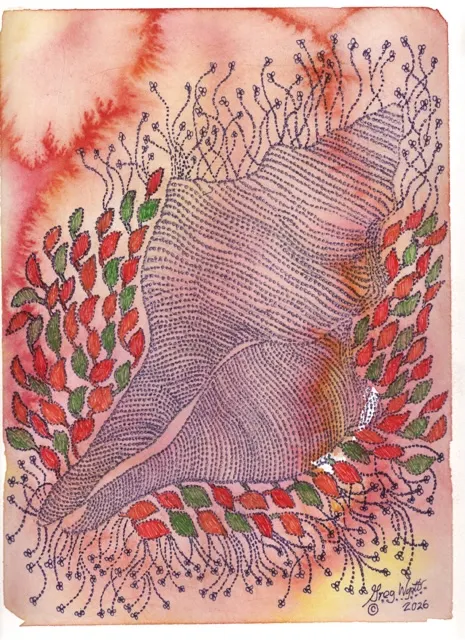
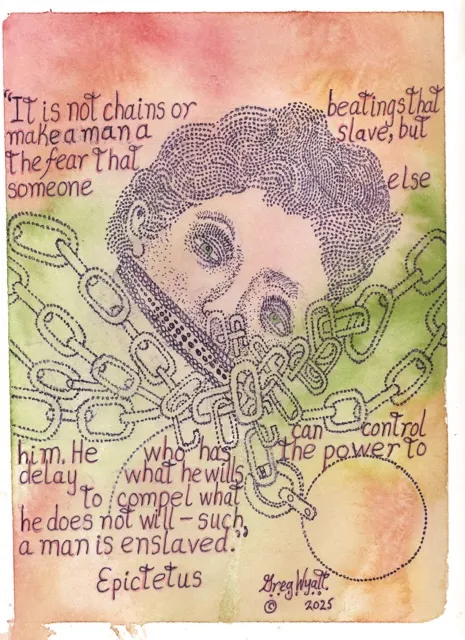
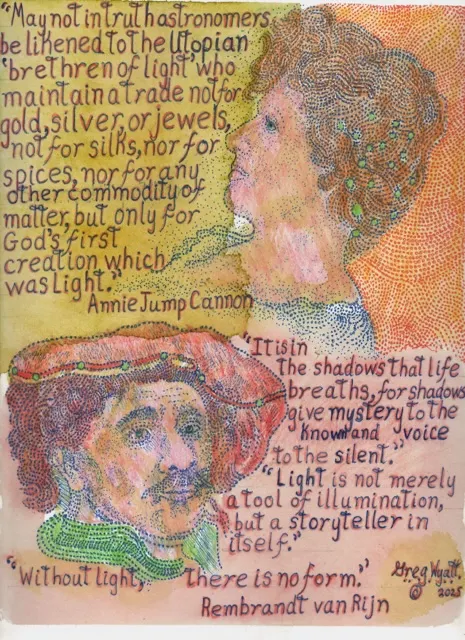
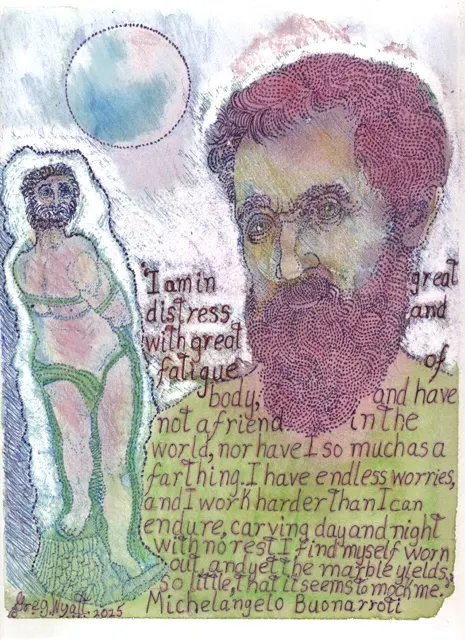
In this essay, I featured eight amazingly beautiful watercolors from a series created and sent to me by the celebrated artist, Greg Wyatt.
Authorized publication by Dr.Avi Loeb