Este artigo foi escrito originalmente em inglês.
 Ler em Português
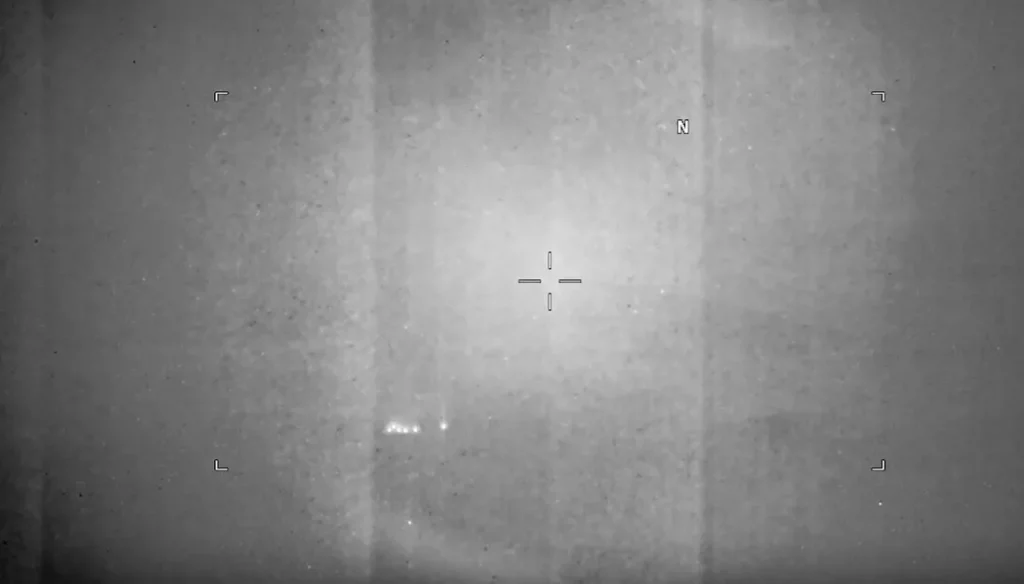
The sixth tranche of archival data on Unidentified Anomalous Phenomena (UAP) was released here on September 18, 2026 by the U.S. Department of War on behalf of the Presidential Unsealing and Reporting System for UAP Encounters. A couple of hours later, I was heading to Logan airport in Boston, Massachusetts on a flight to Seoul, South Korea. There, on a different side of the Earth, I am scheduled to deliver a public lecture on UAP and represent the selection committee for the worldwide Miwon Peace Prize. The prize is awarded this year to “The Bulletin of Atomic Physicists” which was founded in 1945 by former Manhattan Project scientists shortly after the atomic bombings of Hiroshima and Nagasaki. The founders felt a deep responsibility to inform the public and influence policymakers about the existential dangers of the nuclear age. Albert Einstein served as a founding member of its Board of Sponsors, and J. Robert Oppenheimer was its first chair.
As humanity contemplates existential threats from nuclear wars or AI robots, related facilities are being monitored by UAP. The fundamental question is whether UAP represent human-made black projects or alien technologies, far more advanced than anything humans developed so far.
The sixth UAP tranche spans more than seven decades of records (1952 to 2025) through 55 PDF files, 15 videos, and an audio file. It includes here a 1-minute of video footage from an infrared sensor aboard a U.S. military platform over the Middle East in 2025. An accompanying mission report (DOW-UAP-D108) described the UAP as “six small spherical objects grouped together, and characterized their behavior as “seem[ingly] agile,” and “frequently changing direction.” The reporter estimated the speed of the UAP to have been 480 miles per hour (mph), about 63% of the speed of sound at sea level (770 mph). The reported high speed excludes a flock of birds as the UAP. This video is accompanied by a report which gives it context and quantitative characteristics. The UAP Science Advisory Council requested supporting analysis of released videos, and we were delighted to discuss this report and other data from the sixth UAP tranche just before I boarded my flight. Without WiFi on the 15-hour-long flight from Boston to Seoul, I had to decline about a dozen television interview requests regarding the sixth UAP tranche as I boarded the plane.
The cluster of lights could potentially be a drone swarm. But in that case, it represents extraordinary physical characteristics. The speed of a single drone is typically 40–70 mph with military fixed-wing drones of the Predator/Reaper class reaching 120–300 mph. However, this special class represent aircraft, not the small multi-rotors that match “orb” size reports. Racing, battery-powered quadcopters reach up to about 300 mph, achievable in a straight-line dive under ideal conditions but not in a sustainable flight, and with a battery life measured in seconds. One-way attack drones of the Shahed-class reach 115–185 mph in a typical cruise. However, coordinated drone swarms operate well below the speed records of individual drones. Maintaining formation requires each unit to know where its neighbors are in order to avoid collisions. At mesh-network update rates of 10–100 Hertz, higher speeds mean larger position uncertainty between updates. Formation integrity degrades considerably above 80 mph for tight formations. Given an acceleration uncertainty, the spatial spread of a drone swarm scales with speed squared. The required power draw scales with speed cubed in order to compensate for aerodynamic drag. A swarm flying at racing speeds has flight times of a few minutes at best. Subject to the above constraints, coordinated swarms operate at up to 150 mph, a factor of 3.2 below the reported value of 480 mph. Does this report imply some advanced drone technology in China or alien technology?

Another video here shows a white sphere going through clouds above the Yellow Sea and leaving a faint trail through its interacts with the clouds. This interaction demonstrates that the UAP is a physical object and not a camera artifact.
In addition, the release includes a 1952 audio recording of a presentation by Captain Edward J. Ruppelt (DOW-UAP-PR160, with transcript as DOW-UAP-D154). Ruppelt was the first director of Project Blue Book and the person who coined the term UFO. This is the “flying saucer talk” recording that Rep. Burlison had specifically requested be released. A 1-minute briefing by Captain Ruppelt revealed that roughly 20% of the 800 cases reviewed by the Air Force in 1952 remained entirely unexplained. Digitized historical footage here, captured by Navy Chief Warrant Officer Delbert C. Newhouse shows a “swarm” of bright airborne objects over Tremonton, Utah in 1952. Though reviewed by Project Blue Book, it remains unresolved due to a lack of fixed reference points. Project Blue Book reports about UAP that exceed the speed of sound by up to a factor of 5 without making a detectable sound. Supersonic motions of this magnitude naturally result in a sonic boom.
An important revelation from this tranche here involves Defense Intelligence Agency (DIA) documents detailing the Advanced Aerospace Weapon System Applications Program (AAWSAP), a secretive 2008 program tasked with investigating foreign aerospace threats and highly advanced, theoretical technologies. Related documents (for example, here and here) show that the program commissioned official studies into warp drives, wormholes, antigravity, and spintronics (an advanced field of electronics leveraging electron spin). A released 2008 expense report explicitly details the 22-million-dollar federal budget allocated to fund this specific inquiry into unexplained phenomena. Moreover, for the first time in the UAP tranches, the released documents explicitly link physiological injuries to UAP encounters. Researchers studying these files investigated a range of health anomalies and physical injuries reported by military personnel following possible contact or close proximity to unknown craft.
Despite these remarkable UAP disclosures, the Pentagon’s All-domain Anomaly Resolution Office (AARO) maintains the view that while these files are labeled “unresolved” due to a lack of sufficient data, they have not found any verifiable evidence linking the above-mentioned incidents to alien technologies. The UAP Science Advisory Council will do its best to uncover and analyze any such evidence if it exists.
Authorized publication by Dr.Avi Loeb