Este artigo foi escrito originalmente em inglês.
 Ler em Português
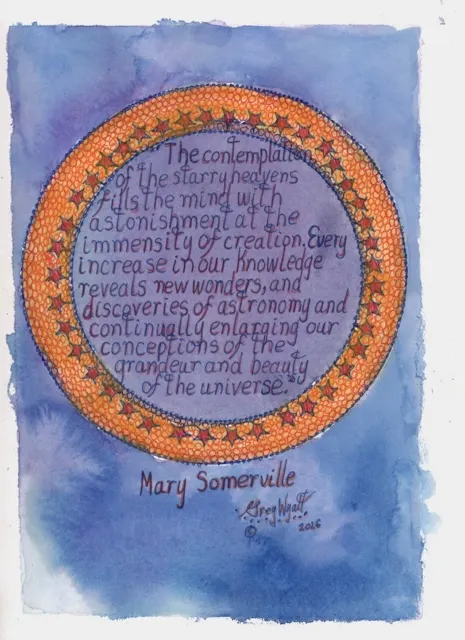
The Universe started with nearly the same initial conditions in all directions and distances. As a result, cosmic time was nearly synchronized everywhere we look. This means that the Big-Bang instant in our past, when the density of matter and radiation diverged, occurred at the same time everywhere we look. As a result, light traversed the same distance towards us since that singular beginning from all directions. As we look out, our cosmic horizon is a spherical boundary, defined by the distance that light traversed over the past 13.8 billion years. That the initial conditions were similar out to much greater distances is a moot point because we cannot access these regions.
The Universe was transparent to gravitational waves since the earliest Planck time of its expansion history. But the thermal background of gravitons is extremely difficult to detect, as explained in my paper with Sunny Vagnozzi here.
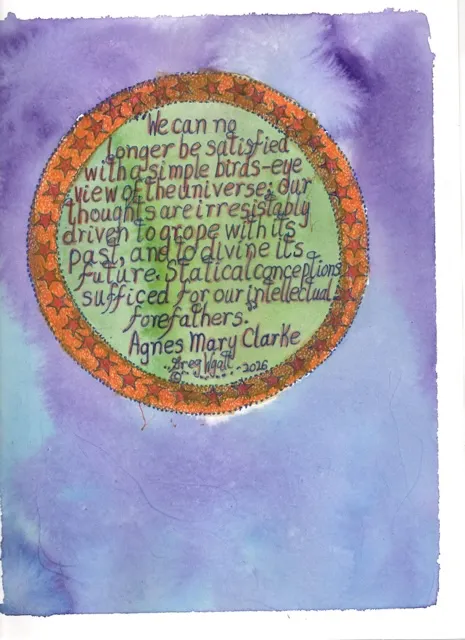
The hot cosmic gas cooled and rarefied enough to become transparent to light about 400,000 years after the Big-Bang. The transition to electromagnetic transparency occurred as soon as free electrons were cold enough to combine with protons and make hydrogen atoms. We observe the resulting cosmic microwave background photosphere from the inside in the form of a spherical last-scattering surface surrounding us. This inside-out orientation is geometrically opposite to the outside-in orientation of the spherical photosphere of the Sun.
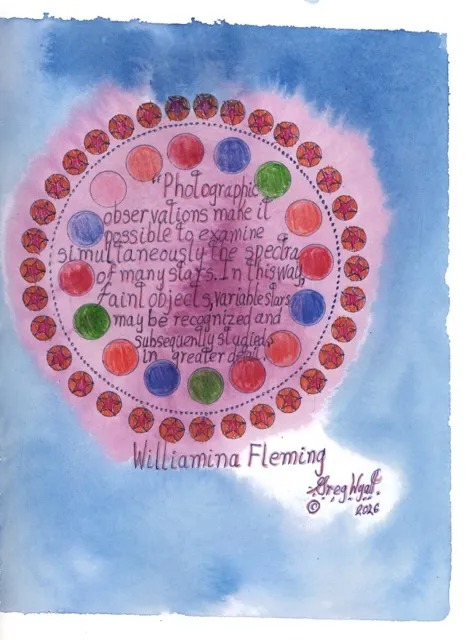
The light emitted by sources farther away from our location must have propagated for a longer travel time in order to reach us today. This means that we see earlier images of the Universe, the farther we look. Observational cosmology is like an archeological dig in which we uncover layers that are progressively more ancient as we dig deeper. The benefit of the finite speed of light is that we can unravel cosmic history by surveying the observable spherical volume of the Universe out to our cosmic horizon. This is possible just because the Universe had nearly the same initial conditions everywhere.
Over time, the small perturbations in the density of matter grew by gravity and ended up as collapsed objects on small spatial scales. Gravity is responsible for making the Milky-Way, inside of which stars like the Sun condensed, next to which planets like the Earth formed. About 15 million years after the Big Bang, the cosmic background radiation had room temperature. If Earth-like planets had existed at that time, they would have not needed to be close to stars in order for their surface to be warmed to habitable conditions. I discussed this in 2014 in a paper titled “The Habitable Epoch of the Universe” here, and in two follow-up papers here and here.
The gravitational growth of cosmic structures stopped in the second half of cosmic history, owing to the accelerated expansion of the Universe — triggered by dark energy. The largest cosmic structures to ever collapse are clusters of galaxies with a quadrillion times the mass of the Sun. We will never see more massive superclusters collapse. They are being torn apart by the accelerated cosmic expansion.
The first stars formed 100 million years later and their ultraviolet radiation started to break the hydrogen atoms into constituent electrons and protons. This so-called epoch of reionization transformed cosmic hydrogen back to a soup of free electrons and protons within a billion years after the Big Bang. The first stars represent our cosmic roots and the scientific version of the biblical phrase “Let there be light!”
The first two decades of my career in astrophysics (1993–2013) were dedicated to theoretically predicting the properties of the first stars and galaxies. These predictions were summarized in two textbooks, titled: “How Did the First Stars and Galaxies Form?” here and “The First Galaxies in the Universe” here. By now, the Webb telescope detected the first generation of stars and galaxies consistently with these expectations, as reviewed most recently here.
The latest Webb data shows that the star formation rate per unit cosmic volume grew steadily by orders of magnitude in the period of 0.1–1 billion years after the Big Bang. The formation of the first stars marks the transition of the Universe into complexity from the simple initial conditions that can be summarized on a single sheet of paper (in terms of the matter budget [dark matter and ordinary matter] and the statistics of the primordial density fluctuations). The first stars also started the production of Carbon, Oxygen, Nitrogen, Phosphorus and Sulphur, elements that are essential for the chemistry of life-as-we-know-it. The early Universe spent only a few minutes at the temperature suitable for nuclear fusion and this short time only resulted in light elements, like hydrogen and helium with a sprinkle of lithium.
The first stars were short-lived. After tens of millions of years, most of them exploded. The inability of hydrogen and helium to cool the primordial gas effectively led to the formation of massive stars which resulted in gamma-ray bursts when some of them collapsed to black holes. Also, mergers of their black hole remnants could be detected by future gravitational-wave observatories. Finally, the Webb telescope and its followers could keep pushing the earliest stellar explosions and galaxies on record, as we probe deeper into our cosmic archaeological dig.
In this essay, I featured eight amazingly beautiful watercolors from a series created and sent to me by the celebrated artist, Greg Wyatt.
Authorized publication by Dr.Avi Loeb