Este artigo foi escrito originalmente em inglês.
 Ler em Português
Today, I responded with answers (A) to the following questions (Q):
Q: What do you see as the most consequential uncertainty in our understanding of the first stars and galaxies, and how can observations of the early universe help distinguish between competing accounts of how the first sources of light transformed the cosmos?
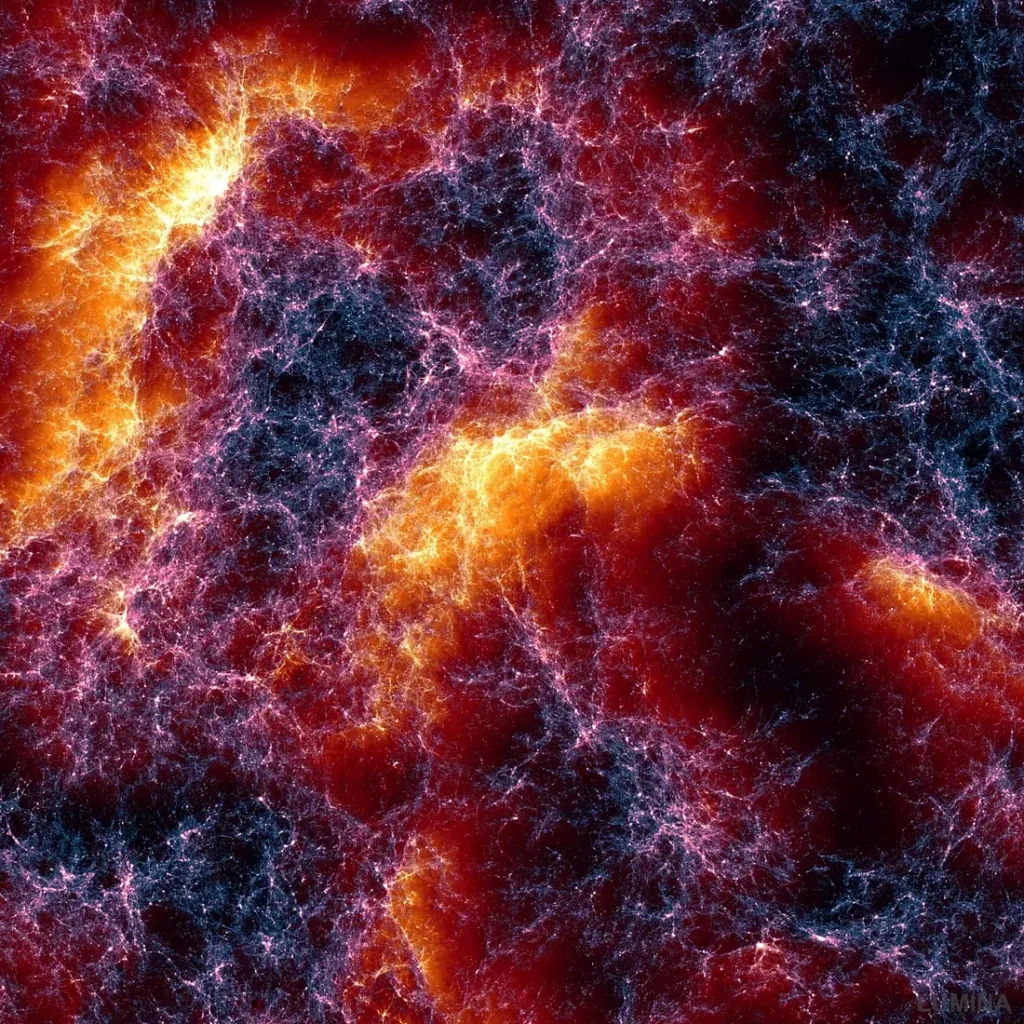
A: The most exciting question is how early did the first stars form after the Big Bang. Their formation marks the transition of the Universe into complexity from the simple initial conditions that can be summarized on a single sheet of paper (in terms of the matter constituents [dark matter and ordinary matter] and the power-spectrum of primordial density fluctuations on smaller scales than were probed so far). The first stars also mark the beginning of the productions of Carbon, Oxygen, Nitrogen, Phosphorus and Sulphur, elements that are essential for the chemistry of life-as-we-know-it. They represent our cosmic roots and the scientific version of the biblical phrase “Let there be light!”
About 15 million years after the Big Bang (or equivalently, a redshift of about z=110), the cosmic background radiation had room temperature. If Earth-like planets had existed at that time, they would have not needed to be close to stars in order for their surface to be warmed to habitable conditions. The popular cosmological model predicts that the first stars form 50 million years later (redshift of z~50). But we need to check if that is indeed the case. I discussed this in 2014 in a paper titled “The Habitable Epoch of the Universe” here, and discussed the broader context in two follow-up papers here and here.
There are several observational signatures that can reveal the answer. The first stars were massive and could have resulted in gamma-ray bursts when they collapsed to black holes. Also, mergers of black holes could be detected by future gravitational-wave observatories. Finally, the Webb telescope and its followers could keep pushing the earliest galaxies on record.
Q: What are your biggest challenges right now? Is it visibility, finding the right audience, getting your books to more readers, sales, or something I haven’t thought of?
A: My research focus changed over the years from the first stars to the study of black holes and recently to the search for alien intelligence. My biggest challenge right now is to discover evidence for alien intelligence. Such a discovery will be more impactful on the future of humanity than artificial intelligence (AI) because alien intelligence is likely to reflect a much bigger database than the terrestrial information used to train AI in our data centers. Most of the real estate is beyond Earth.
We are probably not at the top of the cosmic food chain and we can learn from our most accomplished counterparts. Most of the stars formed billions of years before the Sun and it will take only of order a billion years for Voyager to cross the Milky Way disk relative to the Sun. Alien probes therefore had enough time to reach us even if they used our rocket technology from the 1970s. There are of order tens of billions of Earth-Sun analogs in the Milky-Way alone. Given so many houses in our cosmic street, common sense suggests that we are not alone and many of them had residents because similar circumstances should lead to similar outcomes. Astrobiologists focus on investing more than ten billion dollars over the next two decades in searching for the chemical fingerprints of microbes. But I say that on a blind date with a cosmic partner, we should aim high rather than low. Instead of seeking abundant and mediocre dating partners like microbes, we should search for someone more intelligent than we are. The practical benefit (as in the case of my search for a wife) is that a smarter counterpart can inspire us to do better.
Traditionally, the search for extraterrestrial intelligence (SETI) focused on electromagnetic signals, mostly in the radio. This is equivalent to waiting for a phone call. My approach is to search for a package in our mailbox. This is the goal of the Galileo Project and the UAP Science Advisory Council under my leadership. The latest papers from these initiatives were posted this month here and here.
Think of me as a curious kid, not willing to believe in stories from the adults in the room but rather interested in finding the truth based on evidence. Life can be a self-fulfilling prophecy. Without engaging in the correct search strategy, we will never find anything.
Some people who worked in the U.S. government claim that it has an alien spacecraft in its possession. To them I say: take me to the nearest alien spacecraft!
If a functioning spacecraft is parked on Earth and I am offered a seat on it, I will be first in line to board the spacecraft on a trip to an alien world. I would have no regret leaving Earth towards the stars based on my news feed on current events in our world.
Q: When something unusual turns up in the data, what does it take for you to say it’s technological rather than natural?
A: When faced with anomalous objects, I sometimes feel like the kid in Hans-Christian Andersen’s tale being told by the adults in the room: “The Emperor has clothes but they are invisible.” For example, the first interstellar object, 1I/`Oumuamua, showed non-gravitational acceleration but no coma of outgassing around it. Comet experts now label it as a dark comet, where the cometary tail is invisible. That this is endorsed as a mainstream view demonstrates that scientists do not always follow evidence. More often, they come up with excuses why the evidence is lacking. I discussed this in the context of another example: supersymmetry, in a recent essay posted here.
Regarding the signature of alien technology: with good enough data, the distinction is straightforward. Here are two examples:
1. An interstellar object showing maneuvering towards Earth that cannot be explained by gravity or cometary outgassing. Similarly, regarding the emission of an electromagnetic signal that cannot be natural in origin. Also, if we get a high-resolution image of it, one can discern whether it looks like a natural rock or iceberg or whether it appears to look like an artificially manufactured object.
2. An Unidentified Anomalous Object (UAP) in the Earth’s atmosphere or oceans, which is documented to behave outside the performance envelopes of human-made technologies. Of course, if any such object was retrieved and is currently in possession of the U.S. government or a Corporation like Lockheed Martin, it would be straightforward to infer whether its isotopic composition implies an origin from outside the Solar System, whether the material structure was manufactured artificially or whether the object functions in ways that exceed human products by a large margin.
The Galileo Project constructed three observatories and is starting a fourth observatory with the goal of collecting data on UAP. The UAP Science Advisory Council hopes to partner with the Pentagon and bring high-quality sensors to sites where UAP are observed.
Finding residents in our cosmic neighborhood could shed light on our cosmic origins story. It started simple for the first 100 million years after the Big Bang and became much more interesting 13.8 billion years later, with many intricate details waiting to be unraveled. Pretending to be the elders in the cosmos is unreasonable. We better explore the unknown with a child’s wonder. I do not pretend to do more than that.
Authorized publication by Dr.Avi Loeb