Este artigo foi escrito originalmente em inglês.
 Ler em Português
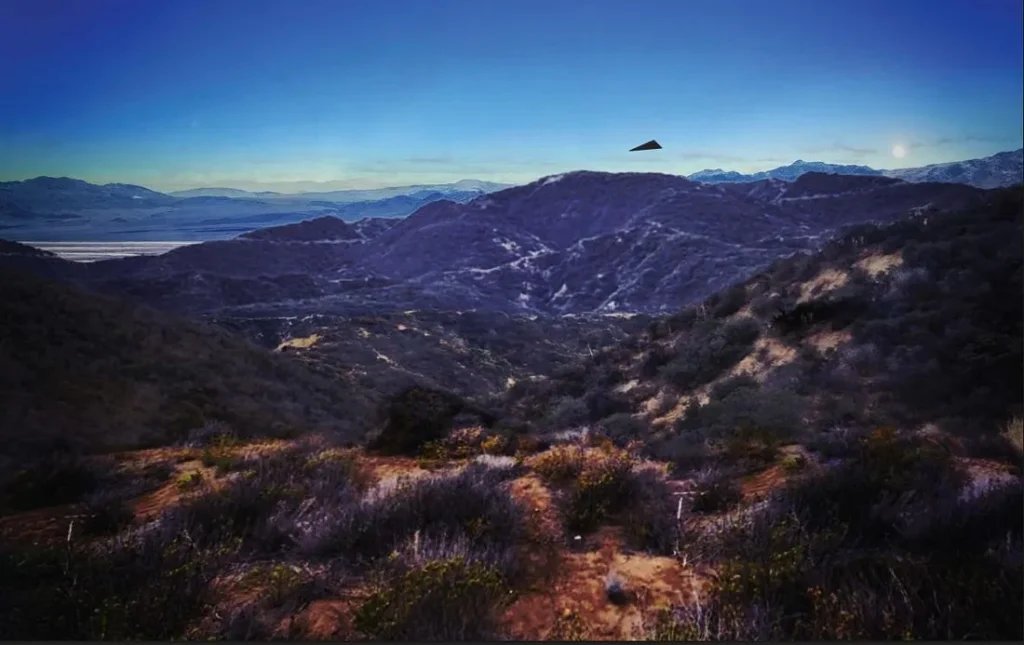
The seventh tranche of declassified data on Unidentified Anomalous Phenomena (UAP) was released today, October 23, 2026, by the Presidential Unsealing and Reporting System for UAP Encounters (PURSUE). In contrast to all previous tranches, this one does not include any videos.
Among its 28 PDF files, there is a historical report about findings at Skinwalker Ranch in Utah. A monthly report from March 2009 implies that Bigelow Aerospace Advanced Space Studies (BAASS) funded faculty from the University Nevada Las Vegas to study how ten disclosure scenarios would affect the media, politics, religion, public health and academia. Scenario 1 is a U.S. government release of declassified UAP files. The report blames a “giggle factor” for academic avoidance. File D168 includes the BAASS Project Management Plan (Dec 2008, DIA contract HHM402–08-C-0072). It asks the Defense Intelligence Agency (DIA) to lobby for access to “biological material of potentially non-human origin”. It also describes “contact” efforts at the ranch (“we were acted upon”) on page 20 and attaches a redacted 2002 Roswell affidavit on page 46.
The file EOP-UAP-D002 (May 1963) is a White House-level report on whether to tell the public about recovered space-vehicle fragments. Arnold Fruitkin, NASA’s chief of international relations, argued a White House statement “would scare people needlessly”. He also noted that the Department of Defense and the Air Force wanted NASA as “cover”, and he opposed going to Congress because of “the harmful debate”. It is unclear whether the discussion is in reference to familiar rocket or satellite debris, or genuine UAP.
The highlight of this release involves a report labeled: “DOW-UAP-D176, Triangular UAP AARO Memorandum for Record, 2026.” In 2026 federal agents saw a matte black triangular craft, about 4–5 meters wide. It climbed to 60–100 meters, hovered for 20 seconds, then dove into a canyon at fighter-jet speed. It made no sound, showed no heat source, and had no visible engines or cockpit.
The PDF file reports an interview of witnesses of UAP observations at a sensitive national security site in the western United States over two days in 2026. The All-Domain Anomaly Resolution Office (AARO) at the Pentagon interviewed two Federal Special Agents and incorporated a corroborating account from a third official positioned at a separate observation post.
The reporting individuals stated that a triangular object rose vertically, remained stationary, and then banked and descended into a canyon. It records their descriptions of the object’s shape, color, apparent thermal signature, perceived lack of conventional propulsion features, and absence of an associated audible signature. A subsequent ground search found no visible debris or evidence of an impact in the accessible survey area.
The three witnesses are described as experienced in operational work and familiar with observing drones and conventional aircraft. One reportedly detected the object with thermal equipment, while the others observed it visually. What makes the account interesting is the combination of reported details. The object climbed almost vertically while keeping a steady orientation, then hovered. The witnesses described no sound, and the thermal view reportedly showed no distinct hot spots or temperature differences across the object. It then banked and disappeared into a canyon in just a few seconds. Those observations do not establish the nature of the UAP and the report does not include a measured speed or raw sensor recordings. The fundamental question is whether the triangular object was manufactured in a black project of an adversarial nation or an extraterrestrial project with off-world technology.
My strategic goal as chair of the UAP Science Advisory Council (https://uapsac.com/) is to deploy new and better sensors in sites where the triangular UAP or mysterious orbs were reported by PURSUE. As we get higher quality data, we will be able to identify the nature of these mysterious objects. In collecting better clues, we will either help the Pentagon and the Intelligence Community fulfil their mission of protecting the U.S. from adversaries or discover technology of non-human origin. Investing in the related research is a win-win proposition.
Below is the full transcript in the released PDF file on the triangular UAP:
“On approximately [REDACTED] 2026, at [REDACTED], federal law enforcement agents documented an unidentified craft presenting as a matte black triangular shape of extremely low aspect ratio that was nonreflective under the observed lighting conditions. It had an estimated thirteen-to-fifteen-foot wingspan, apparent six-to-nine-foot fuselage length, and a maximum vertical thickness of roughly one to two feet. The unidentified craft maintained a completely fixed horizontal alignment with did not tilt, sway, or wobble during the controlled vertical ascent of approximately ten seconds. It climbed to an altitude of an estimated 200 to 300 feet above the local ridge line. Upon reaching this altitude, the craft instantaneously arrested all vertical motion and entered a stable hover for an estimated twenty seconds. It then reportedly transitioned from a zero-velocity state directly into high-speed horizontal flight, executing a fluid banking maneuver and terrain-hugging descent into a canyon drainage in approximately two to three seconds, with speed the observers described to be as fast as a fighter jet. Under banking angle, the craft’s silhouette appeared to flatten and present as a more triangle.
The unidentified craft generated no detectable acoustic signature throughout the entire engagement. It did not produce engine roar, rotor hum, aerodynamic friction, or air-displacement sound despite velocities of conventional military fighter aircraft. In the infrared spectrum it displayed a spatially uniform thermal signature across the entire airframe without localized thermal concentrations, exhaust gradients, or discrete heat sources associated with propulsion. The exterior presented as a continuous (seamless), featureless surface lacking any discernible structural discontinuities, propulsive apertures, intake structures, aerodynamic control effectors, or cockpit features. No physiological effects were reported by the agents.
CHRONOLOGICAL NARRATIVE OF EVENTS:
SOURCE 1 and SOURCE 2 were positioned at the primary observation post conducting routine observation support. Weather conditions were highly favorable for both visual and electro-optical collection, with unrestricted line of sight, negligible cloud cover, and late-dusk illumination. The sun had dropped entirely below the western horizon, eliminating direct solar glare. A residual sunset gradient provided a high-contrast backdrop against the western ridge lines while the deeper valley floors and canyon cuts were rapidly falling into shadow. Primary optical and tripod-mounted sensor systems were initially oriented eastward.
At [REDACTED] location, SOURCE 3, positioned at the secondary observation post scanning westward with long-range thermal equipment, detected an elevated object transiting over the ridge line and called out the contact to SOURCE 1 and SOURCE 2. Upon receipt of the radio alert, SOURCE 1 and 2 reportedly immediately relocated across the peak to establish a westward visual line of sight. Terrain conditions precluded quick relocation of the primary tripod-mounted thermal system. SOURCE 2 noted he advanced with binoculars and a handheld thermal monocular; SOURCE 1 followed seconds later. SOURCE 2 reported acquiring the unidentified craft with the unaided eye as it silhouetted against the residual western sky illumination. Binoculars were employed for initial tracking and then passed to SOURCE 1. SOURCE 2 purportedly powered the handheld thermal monocular and began concurrent infrared observation.
Phase I — Vertical Ascent (Duration: ~10 seconds):
Upon initial visual acquisition the unidentified craft was executing a slow, controlled, perfectly vertical ascent directly over the ridge line. The craft climbed approximately two to three hundred feet while maintaining a completely static orientation without tilting, swaying, or wobbling. The non-reflective, matte black exterior presented a continuous, featureless profile with. No propulsive apertures, rotating elements, rivets, panels, windows, canopy, cabin structures, and no protrusions or structural features were observed. The ascent occurred in absolute acoustic silence. Range to the object was bounded between approximately 1.4 and 3.2 miles west of the primary observation post by terrain cross-reference.
Phase II — Station-Keeping Hover (Duration: ~20 seconds):
Upon reaching approximately 200 to 300 feet above the ridge line, the unidentified craft instantaneously arrested all vertical motion and entered a stable hover. It remained in this station-keeping attitude for approximately twenty seconds with no observable drift or oscillation. The exterior remained uniformly featureless. Under infrared observation the entire airframe presented a spatially uniform thermal signature with no localized hot spots, engine heat [p. 3] signature, or exhaust plumes. No heat shimmer, vapor trail, or particulate discharge was detected. The surface did not exhibit cloaking, optical shifting or distortion, or shimmering properties, remaining matte black throughout. There was no thermal fluctuation or expansion independently of the physical profile of the craft. The transition from stable hover to high-speed horizontal flight occurred without observable acceleration ramp, gradual pitching or momentum.
Phase III — Terminal Maneuver and Loss of Contact (Duration: ~2–3 seconds):
Immediately following the hover, the unidentified craft appeared to transition from a stationary position to rapid horizontal flight. Approximated by the distance made along the ridge before visual contact was lost, the SOURCES estimated that its speed was compared to that as a military fighter jet. No instrumented speed measurement was obtained.
It executed a fluid banking turn and steep, terrain-conforming descent into the canyon with drainage similar in appearance to low-altitude terrain-masking flight. The unidentified craft did not wobble, oscillate, or drift in the wind during any part of its transit, and as it banked to follow the canyon’s path, its physical profile shifted relative to the observers. The entire horizontal transition, bank, and descent lasted approximately two to three seconds before the craft disappeared behind intervening terrain. Under banking angle, the silhouette flattened and presented as a more symmetrical isosceles triangle. Absolute acoustic silence persisted throughout the high-velocity phase. Infrared tracking was lost due to the sudden acceleration exceeding the narrow field of view of the handheld monocular; subsequent unaided visual tracking confirmed the craft’s disappearance into the canyon shadows. No impact signature, smoke, dust, or physical disturbance was observed. A ground survey of the canyon drainage conducted the following morning located no wreckage, ground scarring, or vegetation damage.
Collector Note:
SOURCE 1 and SOURCE 2 have extensive operational experience working alongside government agencies and academic studies utilizing unmanned aerial systems (UAS) and regularly observe conventional aircraft operating around the observation site. They noted that on this hilltop, even a conventional Group 1 drone, high-torque quadcopter motor, or rotary-wing aircraft operating at a distance of 1.4 miles would have been clearly audible. The SOURCES established a spatial, elevation, and speed bounding for the unidentified craft based on prominent local terrain features. SOURCE 1 and 2 compared the physical outline of the craft against the trees along the ridge line behind it providing a reliable physical scale reference.
The two primary witnesses reported no physiological effects. There were no reports of (but not limited to) disorientation, nausea, headache, dermal sensation, visual disturbance, memory gap, or other anomalous sensory phenomena. No anomalous odors were noted. No electromagnetic interference, signal degradation, or anomalous sensor readings were recorded on personal or agency equipment.”
Authorized publication by Dr.Avi Loeb