Este artigo foi escrito originalmente em inglês.
 Ler em Português
The Universe started with a nearly uniform density of matter and radiation. If the initial density fluctuations were a hundred times weaker, the Universe today would have been dark, filled with a nearly homogeneous gas of mostly hydrogen atoms at a density of one atom per 4 cubic meters and a temperature of 0.02 degrees K above absolute zero! Such a Universe involves nothing to write home about for three different reasons: there would have been no writer, no surface to write on, and nowhere to call home.
In the actual Universe we inhabit, the deviations from the mean density were initially one part in a hundred thousand. If they had been below a part in ten million, then no structure would have had enough time to condense gravitationally in the first 9 billion years of cosmic history. Subsequently, the accelerated cosmic expansion, triggered by dark energy, would have halted any further growth of structure. In that case, the Universe would have simply cooled through cosmic expansion. The hydrogen gas would have cooled faster than the cosmic microwave background — the relic radiation from the Big Bang with a current temperature of 2.726 degrees Kelvin. In the first 10 million years after the Big Bang, the gas and radiation were thermally coupled, but this coupling was later lost. By now, the hydrogen gas would have cooled to a temperature that is 150 times lower than the microwave background, namely 0.02 degrees Kelvin!

The entire Universe would have been filled with an extremely cold and rarefied hydrogen gas if it had started with density fluctuations that are a hundred times smaller. Throughout the entire observable volume, stretching out to 46.5 billion light years, there would have been no galaxies, no stars, no planets and no life. Just a nearly uniform fog of matter and radiation, fading away.

These conditions could have been summarized on a single sheet of paper.
Compare that to the actual information content of our Universe. In 2026, humanity invested more than half a trillion dollars in data centers for training artificial intelligence (AI) systems. These data centers store information from Earth. There are more than a hundred billion planets in the Milky-Way galaxy along and more than a trillion galaxies in the observable volume of the Universe. We would have needed to invest at least 10^{35} dollars to store information from all these planets, not to speak about additional information concerning their host stars or the fact that cosmic history spans a time period that is a million times longer than documented human history. All of this information would not have existed if the primordial density fluctuations were a hundred times smaller. In that case, the entire information content of the cosmos would have fit on a single sheet of paper.
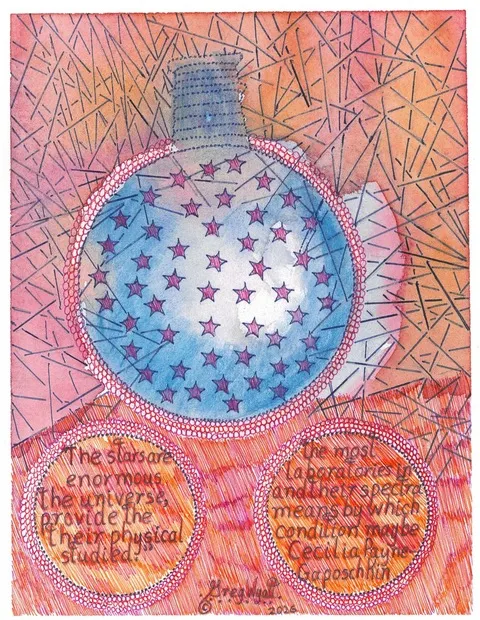
The only reason we find a rich content in the present-day Universe, is thanks to the gravitational growth of the primordial fluctuations to galaxies, stars and planets.

In reality, the seed fluctuations had enough time to grow gravitationally. Regions which were slightly denser than average became denser over time. Owing to their self-gravity, and eventually collapsed to form gravitationally-bound objects like galaxies, inside of which gas fragmented into stars, leaving behind debris that coalesced into planets. The formation of the first stars and galaxies started about 100 million years after the Big Bang.
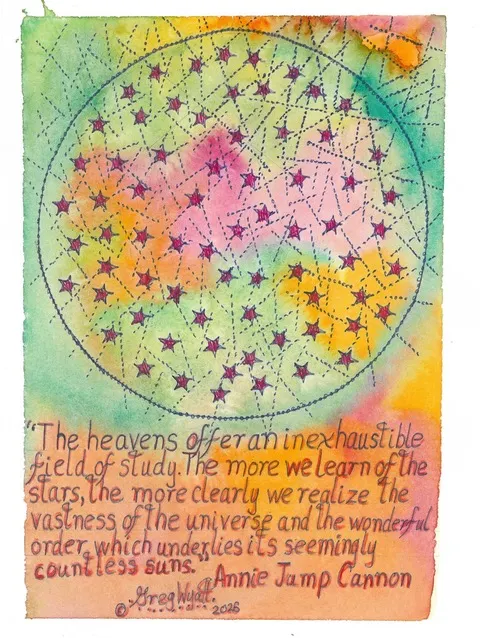
The first galaxies were roughly a million times less massive than the Milky-Way galaxy. Over time, they hierarchically merged like Lego-pieces to make bigger galaxies. Inside galaxies, gas condensed to a disk with a density that is about a million times higher than the cosmic average, then clumped into molecular clouds where the mean density rose by another 4 orders of magnitude and finally, it fragmented into stars where the density grew by another 20 orders of magnitude. The Solar System is an extremely dense region relative to a typical region of its volume in the Universe.
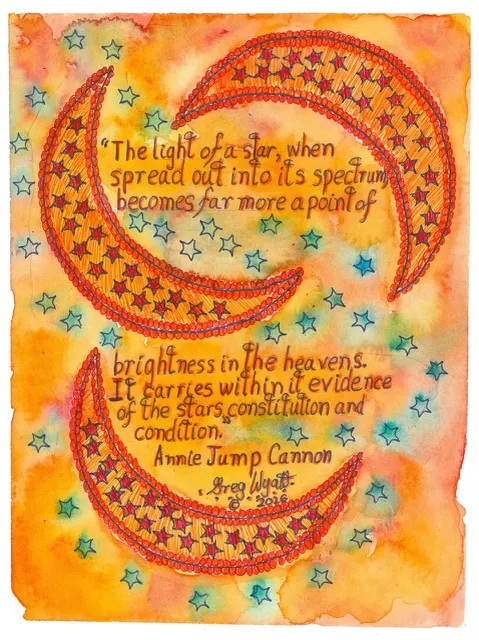
My career as faculty at Harvard University started three decades ago in forecasting how the first stars and galaxies formed in the early Universe. These stars illuminated the Universe and also heated and broken the hydrogen atoms through the process of reionization. This research frontier defines the scientific version of the story of genesis: “Let There Be Light!” Fifteen years ago, I wrote two textbooks on the subject, published here and here. By now, the related predictions were mostly verified by the latest data from the Webb telescope.

The fact that the Universe was not perfectly uniform accounts for our cosmic blessings, as our day is dominated by light from the Sun and our night sky is full of stars. Life would not have been possible in a perfectly uniform cosmos. For details about how life actually emerged in our cosmos, see my third textbook here.
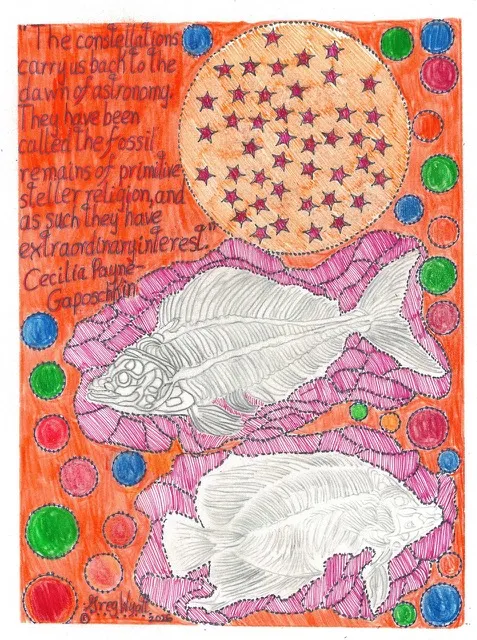
The stars that light up our sky are nuclear fusion reactors, bound by gravity. They burn mostly hydrogen, left over from the Big Bang, and eventually consume their fuel. The Sun will die in 7.6 billion years. The lowest mass (dwarf) stars will last for 10 trillion years, about a thousand time longer. All in all, over trillions of years, these beautiful lights in the sky will all die. The fireworks that were lit up thanks to the primordial density fluctuations will eventually be extinguished like vigil candles for the life forms that ever blossomed in the cosmos.

Eventually, there will be nobody left to mourn what was lost. Darkness is the ultimate fate irrespective of the initial fluctuations. It was fun to join the party while it lasted. But in retrospect, stellar fireworks are just a temporary flicker of hope around the sobering truth that nothing survives death.
Understanding these circumstances teaches us modesty. Life in the cosmos is an afterthought. Even with the primordial density fluctuations, the first 100 million years after the Big Bang included no galaxies, no stars and no planets. The Sun was born in the last third of cosmic history, 4.6 billion years ago. The human species emerged only in the last 0.1% of cosmic history.

With this perspective, we should have never had the hubris to believe that we reside at the center of the Universe or that the Universe was created with us in mind. Moreover, given the huge number of Earth-Sun analogs, we are probably not unique or special, nor are we at the top of the cosmic food chain. And if aliens visit the inner Solar System, it is not because of us. In case they had been around long before us, they are the indigenous species of our cosmic neighborhood that merits respect, not us.
For the world religions, it is important to acknowledge that God is probably not a parent to a single child. Most of our siblings in the family of intelligent civilizations died by now. It is our duty to find the most accomplished ones and learn from them with humility and no sense of jealousy.

In this essay, I featured fourteen amazingly beautiful watercolors from a series created and sent to me by the celebrated artist, Greg Wyatt.
Authorized publication by Dr.Avi Loeb